Book Appointment Now
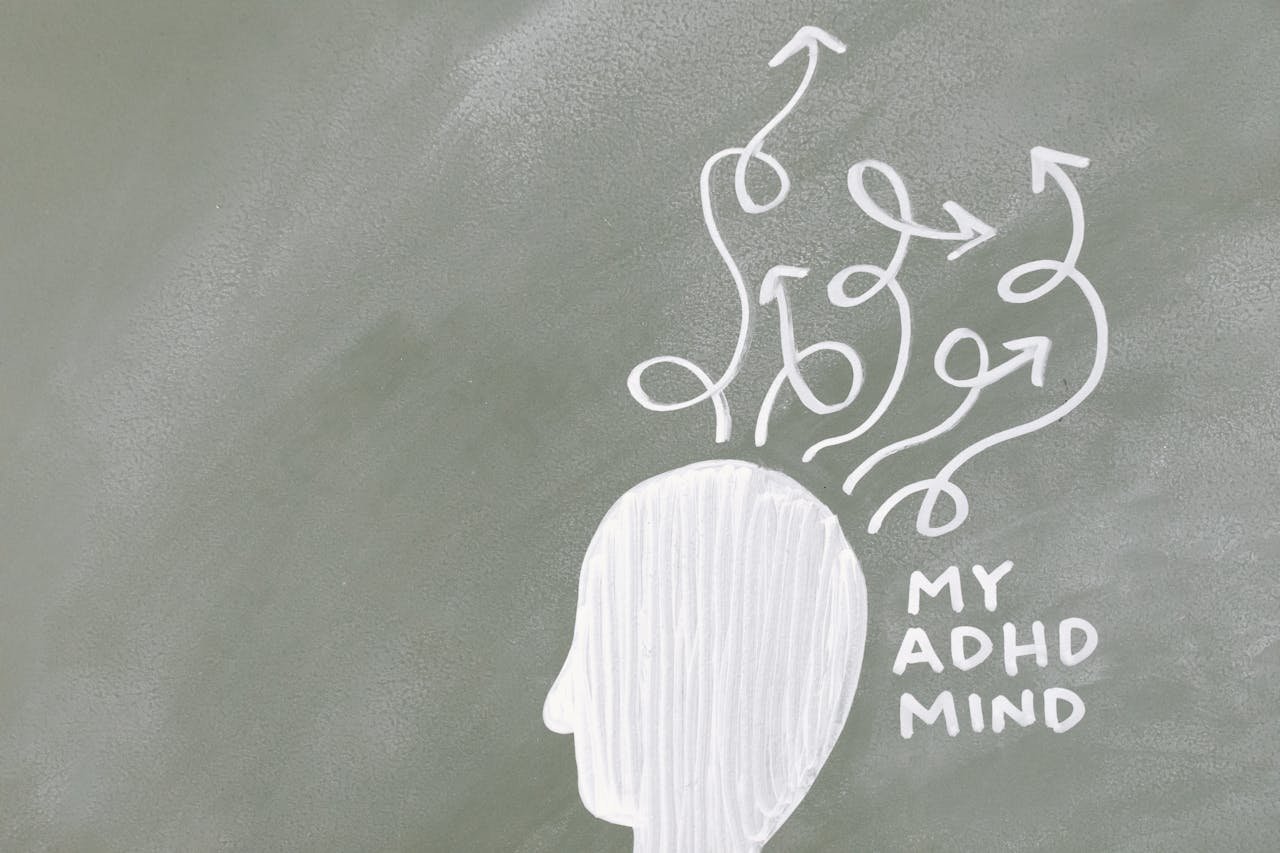
Why Reading Is So Hard for People With ADHD
Imagine sitting down to read a book, only to find your mind drifting off the very next sentence. Many
people with ADHD know this feeling all too well. Contrary to the “hyperactive bunny” stereotype, ADHD
brains often aren’t brimming with endless energy instead, they frequently feel mentally exhausted .
Reading demands sustained focus, memory, and mental effort, all of which are tougher for someone with
ADHD. If you have ADHD and struggle with reading losing your place, having to reread paragraphs, or
feeling overwhelmed by texts you’re not alone. In this article, we explore the science behind these
struggles. We’ll look at how ADHD affects attention, working memory, processing speed, and even
emotional regulation during reading. Most importantly, we’ll share concrete, research-backed strategies to
make reading easier and more enjoyable .

For readers with ADHD, focus is often like a flickering flashlight beam. Brain studies show that people with
ADHD tend to keep the mind’s “daydreaming network” partly turned on even during tasks . In other
words, the part of your brain that let’s you drift into thought (the default mode network) doesn’t fully shut
off when you try to read. Imagine trying to watch a movie while someone else is talking nearby bits of the
dialogue come through, but the plot gets lost. In practical terms, this means you might start reading a
page, only to look up and realize you have no idea what the last two paragraphs said. Research by the
National Human Genome Institute found that adults with ongoing ADHD symptoms had trouble keeping
their task-focused brain networks (“online” attention) balanced against the mind-wandering networks .
As a result, distractions (even minor ones) are hard to ignore. You may hear a car outside or remember an
unrelated errand, and suddenly you’re rereading the same line for the third time. This broken focus makes it hard to connect ideas or follow a narrative smoothly .
Because sustaining attention is so effortful, people with ADHD often must exert extra mental effort just to
stay on track. It’s like your brain is constantly pushing uphill while others coast. Studies confirm this: one
writer notes that neurotypical readers can tune out distractions almost automatically, but an ADHD brain
has many of these filters “dysregulated,” so you must consciously force yourself to focus . The result is
that reading becomes tiring much faster. In fact, research shows the ADHD brain has to work harder for the same result meaning you burn through mental energy pages sooner than a reader without ADHD .
How ADHD Affects Focus and Attention
At its core, ADHD is about attention differences. The Diagnostic and Statistical Manual (DSM) describes
ADHD as involving patterns of inattention, hyperactivity, and impulsivity. These traits play out in reading in
several ways. First, sustained attention is a challenge. You may start a book or article eager to read, but
soon your gaze drifts. Scenes on the page turn into shapes as your mind zooms off to other thoughts. This
isn’t laziness it’s how ADHD minds work. A paper on ADHD and brain networks explains that people with
persistent ADHD symptoms often cannot fully “switch off” introspective brain areas when doing a task .
In practice, a person might read a paragraph but immediately start thinking about dinner plans or a
conversation they had, without realizing it. This makes maintaining the “flow” of reading very hard .
Second, inattention and impulsivity can interrupt reading. You might feel restless sitting still, or quickly
flip to a different activity (like phone browsing) without meaning to. Every interruption means you lose the
thread of the story or argument. The effort to refocus after each distraction adds up. One study notes that
even kids who can decode words fine can end up with poor reading fluency if their attention falters . In
other words, you may know how to read all the words, but they don’t flow into understanding because your mind keeps resetting. Every time you snap back, you have to piece together where you left off.
Finally, processing speed is often slower in ADHD. This isn’t about intelligence it’s that the mental
“translators” take longer. A landmark study found that children with ADHD read more slowly than their
peers . That extra fraction of a second to register each word may not sound like much, but over a page it
adds stress. Because you have to concentrate harder on decoding, there’s less energy left for thinking about meaning. As a result, reading feels like running with weights on your legs it takes more time and effort to cover the same distance. Over time, this can make reading an exhausting slog.
The Role of Working Memory in Reading
Another big factor is working memory your brain’s “scratchpad” for holding information. Good readers
keep what they just read active in their mind so they can connect it with what comes next. For someone
with ADHD, this scratchpad tends to be fragile or small . Imagine trying to build a puzzle without
being able to see all the pieces at once: each sentence you read is another puzzle piece, but working
memory limits how many pieces you can juggle.
Research makes this clear. In one study, children with ADHD and their peers were given reading tasks,
sometimes with an extra memory challenge added . The ADHD group’s comprehension dropped much
more when they had to hold extra information in mind while reading . In other words, even a small
additional load (like remembering a number while reading a line) cut their understanding significantly,
whereas other kids handled it easily. This shows that ADHD readers are already near their working memory limit when reading normally. Add any extra demand and the whole system breaks down.
A similar study used “retell a passage” tasks and found that children with ADHD often missed the central
ideas of a story . They might recall some details, but the main point slipped away. The researchers called
this a “centrality deficit.” Crucially, they showed it was tied to working memory. Kids who could better juggle thoughts in their heads remembered the core plot; those with weaker working memory forgot the big ideas. Think of it like trying to explain a movie: someone with good working memory can give you the plot (the big picture), while someone else only remembers random lines of dialogue. In reading, the same thing happens the ADHD reader might know individual sentences, but lose the story arc.
We see this in daily life: maybe you read a paragraph, put the book down, and a minute later you can’t tell
someone what you read. Or you find yourself saying, “Wait, what did I just read?” Working memory is why. It holds the last few sentences in mind while you read the next ones. If your working memory runs out
quickly, you are forced to reread or you just miss information.
The impact shows up in how ADHD readers tackle text. One study (Jacobson et al.) found that “slower
processing speed” and weak working memory were the main culprits for poor reading fluency . Even
kids without decoding problems (they could read words fine) were slowed down if their working memory
was underdeveloped. The slowed code was mostly due to working memory and decision-making steps in
reading. In short, when working memory struggles, every new sentence takes longer to sink in. You
may read the same sentence multiple times, trying to link it to the previous one, and that drags out the
whole process.
Another research (Friedman et al.) identified the same core issue. They found boys with ADHD had
significant deficits in phonological memory (holding sounds/words) and visuospatial memory . These
children also had trouble “orthographic conversion” quickly turning written letters into sounds. Both
memory and decoding played a role in their reading comprehension gap. Put simply, ADHD often comes
with multiple little hiccups: you may be slower at sounding out words and slower at remembering them.
Together, these add up to big reading problems .
In day-to-day terms, think of reading with ADHD like walking with a sticky backpack of information on your back. It’s harder to carry new ideas in your head. A metaphor: it’s as if as you read each line, your brain forgets the beginning of the line by the end. You are always catching up.
Why Reading Fatigue Happens
All this extra effort leads directly to fatigue. It’s not just tired eyes the brain itself gets exhausted. Imagine walking a tightrope all day; your mind with ADHD is doing that every time you try to concentrate. A recent review notes that compared to people without ADHD, those with ADHD must use more energy to ignore distractions and stay on task . If a non ADHD brain is in “cruise control” during reading, an ADHD brain is in “manual” and constantly juggling controls. This constant vigilance is draining.
In fact, many people with ADHD report that reading especially dense or dry material leaves them feeling
mentally wiped out. Psychology writer Rachael Green even calls ADHD-related tiredness “mental fatigue”
and points out that it’s a prevalent symptom of ADHD . For example, one guide observes, “staying
focused for a long time while reading can be tiring for people with ADHD. This mental fatigue slows
understanding and makes it harder to remember what was read” . In other words, the longer you force
your brain to stay on that page, the more fuel it burns, and eventually it sputters out.
Because of this, what might seem like a short reading task to others can feel like a marathon to you. Have
you ever had to stop reading because your brain just could not process one more sentence? You might pace around, fidget, or take a nap out of sheer exhaustion. This isn’t a lack of willpower it’s a physiological response. When the brain is fatigued, it’s like a muscle cramping up.
Another angle is motivation and reward. ADHD brains are wired differently: they often need a stronger
“reward” signal to keep going on a task. Reading for pleasure might give that signal occasionally, but heavy textbooks or bills do not. When the stakes are low, your brain says “eh, not worth it” and the energy flows out. Some researchers talk about “effort discounting” in ADHD tasks that require sustained mental effort feel much less appealing when dopamine signals don’t reinforce them . Every page of boring text feels like a chore.
Slower processing speed adds to fatigue too. When decoding words is sluggish, reading “takes longer,” and your brain must stay active for a longer stretch to get through the same chapter. It’s like running the same distance slower you still use up energy, if not more. Jacobson’s study tied ADHD reading slowness to working memory and processing-speed deficits . These children were already behind at baseline, so by
the end of a page they were mentally depleted.
All of this means that reading sessions need to be broken up. People with ADHD often do best by reading
in short bursts: maybe 10–15 minutes at a time followed by a break. Repeated experiences of hitting mental wall can also cause “reading anxiety.” You might start to dread books, anticipating the struggle. That emotional toll is real frustration about reading problems is common for ADHD students . Over time,
this can lower confidence. The good news: understanding that these challenges are neurological (no
personal failings) can relieve some of that stress.
The Impact of Hyperfocus and Dysregulation
Interestingly, ADHD isn’t only a deficit it can flip to the opposite extreme, too, via hyperfocus. Hyperfocus
is when you become completely engrossed in something interesting, tuning out everything else . For a
person with ADHD, a dull textbook might drain energy, but a favorite comic or an exciting novel can pull you in for hours. You might find yourself at 3 AM still reading, forgetting to eat or stop. This is hyperfocus in action. One review describes it as total absorption: “a person appears to completely ignore or ‘tune out’
everything else” when hyperfocused . While this intense focus on a liked topic can help you fly through
reading you enjoy, it has a flip side: it’s unpredictable. It can also set up disappointment when other reading doesn’t grab you. Hyperfocus can also be a double-edged sword. Because it’s driven by interest, once the excitement wears off or if something interrupts you, it can be very hard to regain. You might suddenly feel stuck, or annoyed that you “lost” your place or train of thought. Shifting back to normal focus takes extra effort after hyperfocus, just as shifting to intense focus did. It’s a roller-coaster of attention.
ADHD also involves dysregulation in self-control not just of attention, but of emotions and impulses.
Many people with ADHD have emotional ups and downs more easily. When it comes to reading, this means you may get easily frustrated or discouraged. If you stumble over a difficult sentence or have to re-read a paragraph, some people with ADHD report feeling anger or defeat. Over time, these emotions can build up.
As one expert blog notes, “frustration or anxiety around reading tasks can develop from repeated failures to comprehend text,” which may lead to avoiding reading altogether . In practice, this might look like putting off reading homework until the last minute, or skipping reading instructions on the job. Those feelings arevalid reading is genuinely harder for your brain, and it hurts more than for others when you fall behind.
In short, ADHD can pull focus in two directions: sometimes so scattered that reading is hard, and
sometimes so laser sharp (hyperfocus) that normal tasks feel trivial. Neither extreme is ideal for steady
reading habits. Recognizing this pattern is key. If you catch yourself either zoning out completely or
ignoring everything else during reading, try to adjust.
Strategies That Can Help
The good news is there are research backed strategies to make reading easier with ADHD. These won’t
magically “cure” the underlying brain wiring, but they can harness it and reduce struggles. Here are some
effective approaches that experts recommend:
•Chunk it up. Break your reading into very small segments even a few paragraphs or a page at a
time. Use a timer or app: read for 10–15 minutes, then take a 3–5 minute break to stretch or move
around . By giving your brain permission to rest, you can keep attention fresh for each chunk.
Some people call this the “Pomodoro” method (work 25 minutes, break 5 minutes); even shorter
bursts can work well for readers with ADHD.
•Use audio and multisensory input. Listen to audiobooks or text-to-speech while you read along.
You’re engaging two senses (hearing and seeing), which can strengthen focus and memory. If you
find your eyes wandering, reading the words out loud or mouthing them can anchor your attention
on each word. Research suggests reading aloud or listening can help ADHD readers stay engaged.
•Highlight and annotate. Keep a pen or highlighter in hand and mark up the text. Underline key
phrases, write a short summary in the margin, or make a quick “mind map” on paper. These active
reading strategies force your brain to engage with the material, rather than let it passively flow by.
As the Very well article notes, taking notes and highlighting are practical tools for remembering what
you read .
•Add an appropriate “fidget.” This may sound counterintuitive, but small movements can help
maintain focus. Try having a stress ball in hand, doodling simple shapes on scrap paper, or quietly
tapping your feet. Experts like Rotz and Wright suggest that secondary “fidget” activities ones that
don’t take your mind off reading can actually improve focus . For example, listening to
instrumental music at low volume or chewing gum can help some readers without distracting from
the text. (The key is choosing a minor, repetitive action – full-on distractions like scrolling on a phone
will break focus.)
•Optimize your environment. Find or create a reading spot with minimal distractions. If background
noise derails you, try noise-cancelling headphones or earplugs. Some people need a white noise
machine or soft instrumental music to drown out other sounds. Others benefit from a standing desk
or wiggly chair to let extra energy out. Experiment: you might discover that reading outside or in a
particular chair works better. A tidy workspace and good lighting also reduce the chance of external
interruptions.
•Preview and question. Before diving in, spend a minute skimming headings, summaries, or bold
terms. Give your brain a roadmap of what’s coming. Then, set a small goal or question (“I want to
learn one fact about photosynthesis”) to keep yourself on task. This frames reading as a mission,
making it more engaging.
•Connect to interest. Whenever possible, tie the reading to something you care about. If a textbook
feels boring, think about why the topic matters (e.g. “How will this help me in life?”) or look for realworld examples. The more personally relevant or interesting the material, the easier it is to maintain
focus.
•Use technology. There are apps designed for ADHD reading: some turn on a guiding cursor that
moves word-by-word, others change text color to keep eyes on the line (e.g. BeeLine Reader), or
break text into small portions automatically. Even simple tools like bookmarks or sticky notes to track
your place can save you from losing your spot. Also consider apps that block distracting websites or
limit social media during reading time.
•Reward yourself. Pair reading time with a small treat to your reward system. After each reading
session or page count, allow yourself a few minutes of something fun (a quick game, a snack, a short
walk). ADHD brains often respond to immediate rewards, so this can bolster motivation. Gradually,
this builds a positive routine around reading.
•Seek help if needed. If reading difficulties are severe, it’s okay to ask for support. A tutor, coach, or
therapist who understands ADHD can offer personalized strategies. Accommodations (like extra time
on reading tasks) at school or work may also be appropriate. Moreover, treating ADHD with
medication often improves attention and working memory, which can make reading much less
taxing. Discussing options with a doctor or psychologist can be a big step.

Here’s one example of putting these strategies together: Say you have a research article to read. First, skim the abstract and headings. Then, play some quiet focus music and start reading the introduction aloud, highlighting key terms. After two paragraphs, pause the audiobook and take a 2-minute walk. When you return, jot down in a notebook the main point of what you just read (this checks your understanding). Continue in this chunk-and-break pattern. Not only will you finish more efficiently, but you’ll likely feel less drained.
Conclusion
Reading with ADHD can be really hard, but understanding why is empowering. Science shows it boils down to brain differences in attention, memory, processing, and even emotional response. Knowing that you’re not lazy or broken is the first step. With the right strategies, you can improve your reading experience. Break reading into bits, use audio or active reading techniques, and give yourself frequent mini breaks and rewards. Over time, these habits can train your brain to stay engaged longer.
Remember: many successful readers have ADHD they just approach books in different ways. Celebrate
small victories: maybe today you focused through one extra paragraph, or you finally understood a tricky
concept. Each win builds confidence. And if frustration hits, pause and come back later; sometimes a fresh
mind is all you need.
Ultimately, reading is a skill that can improve with practice and support. You might still find it more tiring or challenging than others do, but that doesn’t mean you can’t be a good reader. By using accommodations (like audiobooks or colored overlays), establishing routines, and seeking help when needed, you can unlock the joy of reading on your own terms. Keep experimenting with strategies until you find what clicks. Your ADHD is part of how you process the world by working with it, you can turn reading from a chore into a bit more of a manageable task (or even an adventure).
Sources: Authoritative reviews and studies on ADHD and reading were used. For example, neuroscientific
research shows ADHD brain networks affect attention . Child psychology studies have linked ADHD to
slower reading fluency and working memory limits . Other journal articles have found that ADHD
readers often miss main ideas and suffer fatigue from effortful focus . Strategies cited come from
ADHD experts and educational research .
Scientific Sources & Further Reading
Neuroscience & Brain Function in ADHD
- National Human Genome Research Institute (NIH)
Brain network imbalances in adults with ADHD
https://www.genome.gov/news/news-release/Brain-network-imbalance-found-in-adults-with-ADHD - Castellanos, F. X., et al. (2008).
Cingulate–precuneus interactions: A new locus of dysfunction in adult ADHD
Biological Psychiatry
https://pubmed.ncbi.nlm.nih.gov/18514234/ - Sonuga-Barke, E. J. S., & Castellanos, F. X. (2007).
Spontaneous attentional fluctuations in impaired states
Nature Reviews Neuroscience
https://pubmed.ncbi.nlm.nih.gov/17406644/
Attention, Focus & Default Mode Network
- Raichle, M. E. (2015).
The Brain’s Default Mode Network
Annual Review of Neuroscience
https://pubmed.ncbi.nlm.nih.gov/25938726/ - Sudre, G., et al. (2017).
Default Mode Network connectivity in ADHD
Biological Psychiatry: Cognitive Neuroscience
https://pubmed.ncbi.nlm.nih.gov/28477674/
Working Memory & Reading Comprehension
- Martinussen, R., Hayden, J., Hogg-Johnson, S., & Tannock, R. (2005).
A meta-analysis of working memory impairments in children with ADHD
Journal of the American Academy of Child & Adolescent Psychiatry
https://pubmed.ncbi.nlm.nih.gov/15843763/ - Friedman, L. M., Rapport, M. D., Raiker, J. S., Orban, S. A., & Eckrich, S. J. (2017).
Reading comprehension in boys with ADHD
Journal of Abnormal Child Psychology
https://pubmed.ncbi.nlm.nih.gov/28035624/ - Sesma, H. W., Mahone, E. M., Levine, T., Eason, S. H., & Cutting, L. E. (2009).
The contribution of executive skills to reading comprehension
Journal of Learning Disabilities
https://pubmed.ncbi.nlm.nih.gov/19339779/
Processing Speed & Reading Fluency
- Jacobson, L. A., et al. (2011).
Slowed reading rate in children with ADHD
Child Neuropsychology
https://pubmed.ncbi.nlm.nih.gov/21181539/ - Shanahan, M. A., et al. (2006).
Processing speed deficits in ADHD
Journal of Attention Disorders
https://pubmed.ncbi.nlm.nih.gov/16803977/
ADHD, Fatigue & Cognitive Effort
- Barkley, R. A. (2015).
Attention-Deficit Hyperactivity Disorder: A Handbook for Diagnosis and Treatment
Guilford Press
https://www.guilford.com/books/Attention-Deficit-Hyperactivity-Disorder/Russell-Barkley/9781462517894 - Toplak, M. E., West, R. F., & Stanovich, K. E. (2013).
Practitioner review: Do performance-based measures reflect ADHD deficits?
Journal of Child Psychology and Psychiatry
https://pubmed.ncbi.nlm.nih.gov/22998493/ - American Psychiatric Association (DSM-5-TR)
Diagnostic criteria for ADHD
https://www.psychiatry.org/psychiatrists/practice/dsm
Hyperfocus & Attention Regulation
- Hupfeld, K. E., Abagis, T. R., & Shah, P. (2019).
Living “in the zone”: Hyperfocus in adult ADHD
ADHD Attention Deficit and Hyperactivity Disorders Journal
https://pubmed.ncbi.nlm.nih.gov/30806894/ - Ashinoff, B. K., & Abu-Akel, A. (2021).
Hyperfocus: The forgotten frontier of ADHD
Frontiers in Psychology
https://www.frontiersin.org/articles/10.3389/fpsyg.2021.699593
Educational & Strategy Based Support
- Tannock, R. (2013).
Rethinking ADHD and LD in reading interventions
Learning Disabilities Research & Practice
https://pubmed.ncbi.nlm.nih.gov/23126219/ - DuPaul, G. J., & Stoner, G. (2014).
ADHD in the Schools: Assessment and Intervention Strategies
Guilford Press
https://www.guilford.com/books/ADHD-in-the-Schools/DuPaul-Stoner/9781462511649 - International Dyslexia Association
Attention & reading comprehension
https://dyslexiaida.org/attention-and-reading/